
Recommended Reading List
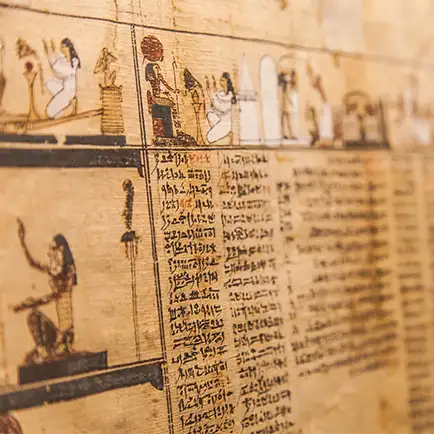
The Egyptian Book of the Dead
Be in the know before you go!
Witches love books. We always have. From grimoires passed hand to hand in secret to the libraries we build in our homes, the written word has carried our traditions across centuries. The books below offer excellent introductions to the world of initiatory Witchcraft, ancient Egyptian religion, and the magical practices that flourished along the Nile—the very traditions we will encounter on this journey. Consider them preparation for the magic ahead.

Isis in the Ancient World
This is the definitive scholarly work on the spread of the Isis cult from Egypt across the ancient world. Witt traces how the Goddess of Ten Thousand Names journeyed from the temples of the Nile to Alexandria, Greece, Rome, and eventually to Britain itself—where archaeological evidence confirms a temple of Isis stood in London. The book explores her priesthood, her mysteries, her three degrees of initiation, and her role as the great sorceress and healer. Your co-host, Brian Cain, cites Witt extensively in his own work, and for good reason: this is the book that demonstrates how Isis became the Queen of Heaven to people the world over, and why her cult posed the greatest threat to rising Christianity. For those who wish to understand how the magic of Egypt flowed into the Western esoteric tradition, Witt's work is essential reading.

Egyptian Magic: The Quest for Thoth's Book of Secrets
This beautifully illustrated volume explores the theory and practice of magic in ancient Egypt—not as superstition, but as a sacred science studied by the greatest minds of the ancient world. Raven, curator of the Egyptian Department at the National Museum of Antiquities in Leiden, examines how magicians served as guardians of the cosmic order, using their craft to protect the vulnerable, support the gods in their battle against chaos, and guide the dead into immortality. The book traces the quest for Thoth's legendary Book of Magic and reveals how Egyptian magical knowledge was preserved in the Hermetic treatises, rediscovered during the Renaissance, and passed into the hands of Freemasons, Rosicrucians, theosophists, and—as Raven himself notes—witches. For those seeking to understand the magical worldview we will encounter in the temples along the Nile, this is essential preparation.

The Complete Gods and Goddesses of Ancient Egypt
Worshipped for over three-fifths of recorded history, Egypt's gods and goddesses are among the most fascinating of human civilization. The lives of pharaohs and commoners alike were dominated by the need to honor, worship, and pacify the huge pantheon of deities, from the benevolent to the malevolent. The richness and complexity of their mythology is reflected in countless tributes throughout Egypt, from lavish tomb paintings and imposing temple reliefs to humble household shrines. This book examines the evolution, worship, and eventual decline of the numerous gods and goddesses—from minor household figures such as Bes and Tawaret to the all-powerful deities Amun and Re—that made Egypt the most theocratic society of the ancient world, and made Egyptians, according to Herodotus, "more religious than any other people."
Gods and Myths of Ancient Egypt
Robert Armour's classic text, long cherished by a generation of readers, is now complemented with more than 50 new photographs and line drawings that show the gods and goddesses in their characteristic forms. Armour maintains a strong narrative thread with illuminating commentary in his lively, vigorous retelling of stories from Egyptian mythology, including those of the sun god Ra, the tragic death and rebirth of Osiris with the help of Isis, the near-burlesque of Horus' battle with the evil Seth, and the "gods of the intellect" Thoth and Maat. Now with an updated bibliography and glossary as well as new charts showing the gods at a glance and ancient Egyptian chronology in brief, this book is sure to inform and enchant a new generation of readers.
The Egyptian Myths: A Guide to the Ancient Gods and Legends
This survey of Egyptian mythology explores how the ancient Nile-dwellers explained the world around them. It delves into the creation and evolution of the world and the reigns of the gods on earth, before introducing us to the manifestations of Egypt's deities in the natural environment; the inventive ways in which the Egyptians dealt with the invisible forces all around them; and their beliefs about life after death. Through his engaging narrative, Garry Shaw guides us through the mythic adventures of such famous deities as Osiris, the god murdered by his jealous brother Seth; the magical and sometimes devious Isis, who plotted to gain the power of the sun god Re; and Horus, who defeated his uncle Seth to become king of Egypt. He also introduces us to lesser known myths, such as the rebellions against Re; Geb's quest for Re's magical wig; and the flaying of the unfortunate god Nemty. From stars and heavenly bodies sailing on boats, to the wind as manifestation of the god Shu, to gods, goddesses, ghosts, and demons—beings that could be aggressive, helpful, wise, or dangerous—Shaw goes on to explain how the Egyptians encountered the mythological in their everyday lives.
Egyptian Mythology: A Guide to the Gods, Goddesses, and Traditions of Ancient Egypt
From stories of resurrected mummies and thousand-year-old curses to powerful pharaohs and the coveted treasures of the Great Pyramids, ancient Egypt has had an unfaltering grip on the modern imagination. Now, in Egyptian Mythology, Geraldine Pinch offers a comprehensive introduction that untangles the mystery of Egyptian Myth. Spanning Ancient Egyptian culture—from 3200 BC to AD 400—Pinch opens a door to this hidden world and casts light on its often misunderstood belief system. She discusses the nature of myths and the history of Egypt, from the predynastic to the postpharaonic period. She explains how Egyptian culture developed around the flooding of the Nile, or the "inundation," a phenomenon on which the whole welfare of the country depended, and how aspects of the inundation were personified as deities. She explains that the usually cloudless skies made for a preoccupation with the stars and planets. Indeed, much early Egyptian mythology may have developed to explain the movement of these celestial bodies. She provides a timeline covering the seven stages in the mythical history of Egypt and outlining the major events of each stage, such as the reign of the sun God. A substantial A to Z section covers the principal themes and concepts of Egyptian mythology as well as the most important deities, demons, and other characters. For anyone who wants to know about Anubis, the terrifying canine god who presided over the mummification of bodies and guarded burials, or Hathor, the golden goddess who helped women to give birth and the dead to be reborn, or an explanation of the nun, the primeval ocean from which all life came, Egyptian Mythology is the place to look.

Divine Egypt
Ancient Egyptian religious practice flourished across millennia and encompassed a staggering array of gods, goddesses, and other divine beings. This publication outlines the rich iconography used to represent Egyptian deities—from the stately falcon-headed Horus, associated with power and kingship, to the fearsome lion-headed Sakhmet—and explores how these representations evolved alongside the roles of the gods themselves. Illustrated with more than 300 exceptional works of art, including statuary, figurines, jewelry, animal mummies, and coffins, Divine Egypt examines the expansive set of features used to symbolize more than 20 deities and their variations while also familiarizing readers with the meaning and cultural significance of each figure. World-renowned scholars explain how the ancient Egyptians recognized and understood divine images and the otherworldly nature of their gods. Essential reading for lovers of Egyptian art, this book enriches our understanding of not only the deities of ancient Egypt but also the lives of all strata of ancient Egyptian society.
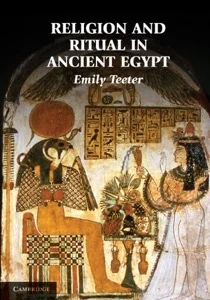
Religion and Ritual in Ancient Egypt
This book is a vivid reconstruction of the practical aspects of ancient Egyptian religion. Through an examination of artefacts and inscriptions, the text explores a variety of issues. For example, who was allowed to enter the temples, and what rituals were performed therein? Who served as priests? How were they organized and trained, and what did they do? What was the Egyptians' attitude toward death, and what happened at funerals? How did the living and dead communicate? In what ways could people communicate with the gods? What impact did religion have on the economy and longevity of the society? This book demystifies Egyptian religion, exploring what it meant to the people and society. The text is richly illustrated with images of rituals and religious objects.
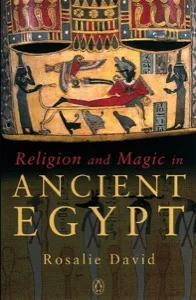
Religion and Magic in Ancient Egypt
The ancient Egyptians believed that the Nile—their life source—was a divine gift. Religion and magic permeated their civilization, and this book provides a unique insight into their religious beliefs and practices, from 5000 BC to the 4th century AD, when Egyptian Christianity replaced the earlier customs. Arranged chronologically, this book provides a fascinating introduction to the world of half-human/half-animal gods and goddesses; death rituals, the afterlife and mummification; the cult of sacred animals, pyramids, magic and medicine. An appendix contains translations of Ancient Egyptian spells.
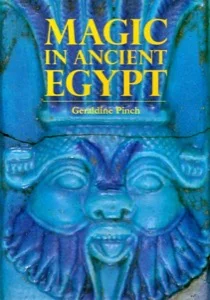
Magic in Ancient Egypt
The Egyptians were famous in the ancient world for their knowledge of magic. Religion, medicine, technology, and what we would call magic coexisted without apparent conflict, and it was not unusual for magical and "practical" remedies for illness, for example, to be used side by side. Everyone resorted to magic, from the pharaoh guarding his country with elaborate magical rituals to the expectant mother wearing amulets to safeguard her unborn child. In this book, Geraldine Pinch examines the connections between myth and magic and the deities—such as the goddess Isis, and the protective lion-demon Bes—who had special magical importance. She discusses the techniques of magic, its practitioners, and the surviving magical texts, as well as the objects that were used in magic: figurines, statues, amulets, and wands. She devotes a chapter to medicine and magic and one to magic and the dead. Finally, Dr. Pinch shows how elements and influences from Egyptian magic survived in or were taken up by later societies, right down to our own century.
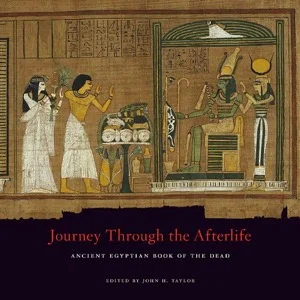
Journey Through the Afterlife: Ancient Egyptian Book of the Dead
The Book of the Dead is not a single text but a compilation of spells that the ancient Egyptians believed would assist them in the afterlife as they made their perilous journey toward the realm of the gods and the ultimate state of eternity. No two copies are identical. The spells are often accompanied by colored vignettes, which graphically show the imagined landscape of the Netherworld, the gods and demons whom the deceased will meet, and the critical "weighing of the heart"—the judgment that will determine whether the traveler will be admitted into the afterlife or condemned to destruction by the monstrous "Devourer." With contributions from leading scholars and detailed catalog entries that interpret the spells and painted scenes, this fascinating and important book affords a greater understanding of ancient Egyptian belief systems and poignantly reveals the hopes and fears of mortal man about the "world" beyond death. The whole is beautifully illustrated with specially commissioned photographs of these exceptional papyri and an array of contextual funerary objects—painted coffins, gilded masks, amulets, jewelry, tomb figurines, and mummy trappings.
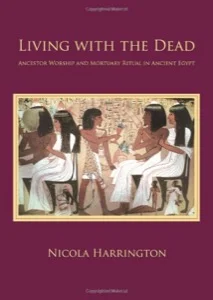
Living with the Dead: Ancestor Worship and Mortuary Ritual in Ancient Egypt
Living with the Dead presents a detailed analysis of ancestor worship in Egypt, using a diverse range of material, both archaeological and anthropological, to examine the relationship between the living and the dead. Iconography and terminology associated with the deceased reveal indistinct differences between the blessedness and malevolence and that the potent spirit of the dead required constant propitiation in the form of worship and offerings. A range of evidence is presented for mortuary cults that were in operation throughout Egyptian history and for the various places, such as the house, shrines, chapels and tomb doorways, where the living could interact with the dead. The private statue cult, where images of individuals were venerated as intermediaries between people and the Gods is also discussed. Collective gatherings and ritual feasting accompanied the burial rites with separate, mortuary banquets serving to maintain ongoing ritual practices focusing on the deceased. Something of a contradiction in attitudes is expressed in the evidence for tomb robbery, the reuse of tombs and funerary equipment and the ways in which communities dealt with the death and burial of children and others on the fringe of society.

The Festivals of Opet, the Valley, and the New Year: Their Socio-Religious Functions
The Festivals of Opet, the Valley, and the New Year: Their socio-religious functions compares the religious and social functions of these three Festivals, the first two of which were often regarded by the Egyptians as a pair; the New Year Festival stands out on account of its corpus of surviving material and importance. Until now, detailed study of the New Year Festival has only been carried out with reference to the Greco-Roman period; this study turns its attention to the New Kingdom. The book analyses the broad perspectives that encompass Egyptian religion and cult practices which provided the context not only for worship and prayer, but also for the formation of social identity and responsibility. The festivals are examined in the whole together with their settings in the religious and urban landscapes. The best example is New Kingdom Thebes where large temples and burial sites survive intact today with processional routes connecting some of them. Also presented are the abundant written sources providing deep insight into those feasts celebrated for Amun-Re, the king of the gods. The volume also includes a list of dated records which provides a concordance for the Egyptian calendars.